Best Tax Saving Options for Freelancers in India (2026 Complete Guide)
Stop paying more tax than you legally have to. Here’s every deduction, scheme, and strategy available to Indian freelancers — explained simply, with real numbers.
⚡ Quick Summary — What You’ll Learn
- How freelancers are taxed differently from salaried employees
- FY 2025–26 tax slabs (Old & New regime)
- Section 44ADA: save tax with presumptive taxation
- Section 80C deductions up to ₹1.5 lakh
- Health insurance (80D) for family savings
- NPS extra deduction of ₹50,000 under 80CCD(1B)
- Legitimate business expenses you can deduct
- Real case study: ₹15 lakh freelancer saves ₹3.1 lakh in tax
- Common mistakes and how to avoid them
- Answers to 10 most-searched freelancer tax questions
Picture this: It’s March 2026. You’ve had a fantastic year as a freelancer — new clients, bigger projects, ₹15 lakh in the bank. Then you open your tax portal, enter your income, and the demand notice hits you like a cold shower. ₹3 to ₹4 lakh in taxes. No notice in advance. No HR department that quietly deducted TDS. Just you, your income, and the Indian Income Tax Act.
This is the reality for lakhs of freelancers, consultants, and gig workers across India every year. Unlike salaried employees whose employers manage taxes, freelancers wear every hat — including the Tax Officer hat. And most of them overpay, simply because nobody told them the rules.
Here’s the truth: the Indian tax code is actually very generous to freelancers — if you know where to look. From the flat 50% expense deduction under Section 44ADA, to business expense write-offs, to NPS investments — a well-planned freelancer can legally cut their tax bill by 40–60%.
This 2026 guide covers every tool, trick, and strategy available to Indian freelancers. Let’s get into it.
1. How Are Freelancers Taxed in India?
Freelancer vs Salaried: The Key Difference
Salaried employees have it easy on the tax compliance front. Their employer deducts TDS from salary, provides a Form 16, and often contributes to PF and other benefits. Freelancers get none of that automation.
Freelance income is classified as “Income from Business or Profession” under the Income Tax Act. This single fact opens up a completely different — and often more favourable — set of rules compared to salaried income.
| Feature | Salaried Employee | Freelancer / Consultant |
|---|---|---|
| Tax Head | Income from Salary | Income from Business/Profession |
| Standard Deduction | ₹75,000 (FY 2025–26) | Not directly available |
| Business Expense Deduction | Not available | Fully available |
| Presumptive Taxation (44ADA) | Not available | Available (50% flat deduction) |
| TDS on Income | By Employer (Form 16) | By Clients (10% TDS, Form 26AS) |
| Advance Tax | Not required | Required if tax > ₹10,000 |
| ITR Form | ITR-1 or ITR-2 | ITR-4 (Sugam) or ITR-3 |
| Books of Accounts | Not required | Required above ₹25L (44ADA) |
Applicable Tax Slabs for FY 2025–26
India offers two tax regimes. Here’s the breakdown for FY 2025–26 (Assessment Year 2026–27):
🏛️ Old Tax Regime
- Up to ₹2.5L: Nil
- ₹2.5L – ₹5L: 5%
- ₹5L – ₹10L: 20%
- Above ₹10L: 30%
- Deductions: 80C, 80D, HRA etc. allowed
✨ New Tax Regime (Default)
- Up to ₹4L: Nil
- ₹4L – ₹8L: 5%
- ₹8L – ₹12L: 10%
- ₹12L – ₹16L: 15%
- ₹16L – ₹20L: 20%
- ₹20L – ₹24L: 25%
- Above ₹24L: 30%
- Most deductions NOT allowed
Under the New Regime, income up to ₹12 lakh is effectively tax-free due to Section 87A rebate (₹60,000 rebate). This is a massive benefit for freelancers earning under ₹12L. However, Section 87A is NOT available on special rate income like capital gains.
Which Regime is Better for Freelancers?
The answer depends entirely on how many deductions you can claim. If your total deductions exceed ~₹3–4 lakh per year, the Old Regime is likely better. If you’re just starting out or prefer simplicity, the New Regime’s lower slab rates can be attractive.
We’ll cover a detailed comparison table further below.
2. The Complete Guide to Tax Saving Options for Freelancers
📋 Section 44ADA — The Freelancer’s Best Friend Up to 50% Off!
This is the single most powerful tax benefit available exclusively to professionals. Under Section 44ADA (Presumptive Taxation Scheme), if your professional income is up to ₹75 lakh per year (increased from ₹50L), you can declare 50% of your gross receipts as profit and pay tax only on that amount — without having to prove a single expense.
Who Qualifies?
Resident individuals engaged in specified professions including:
- IT/Software professionals, developers, designers
- Writers, content creators, journalists
- Doctors, lawyers, accountants, engineers
- Management consultants, architects, interior designers
- Technical consultants and digital marketers
Real Example
Priya, a UX designer, earns ₹18 lakh from freelance projects. Under 44ADA:
— Taxable income = 50% of ₹18L = ₹9 lakh
— She doesn’t need to maintain detailed expense records
— She still gets to claim 80C, 80D, NPS on top of this!
— Without 44ADA, if her actual expenses were ₹3L, she’d pay tax on ₹15L. With 44ADA, she pays on ₹9L.
💰 Section 80C — ₹1.5 Lakh Deduction ₹1.5L Limit
Section 80C is available to both salaried and self-employed individuals and allows a deduction of up to ₹1.5 lakh per year in the Old Tax Regime. For freelancers, this is entirely under your control — no employer needed.
Best 80C Instruments for Freelancers
| Investment | Lock-in | Returns | Best For |
|---|---|---|---|
| ELSS Mutual Funds | 3 years (shortest) | 12–15% (market-linked) | Wealth + tax saving |
| PPF | 15 years | 7.1% (tax-free) | Long-term stability |
| NSC | 5 years | 7.7% | Guaranteed returns |
| 5-Year Bank FD | 5 years | 6.5–7% | Low risk preference |
| Life Insurance Premium | Policy term | 4–6% | Family coverage |
| Sukanya Samriddhi | 21 years | 8.2% | Daughter’s future |
Section 80C deductions are only available under the Old Tax Regime. If you opt for the New Regime (which is now the default), 80C deductions do NOT apply.
For freelancers who want both growth and tax saving, ELSS funds are often the top recommendation. They have the shortest lock-in (3 years) and historically strong returns. Check out our guide on best ELSS funds for 2026 for detailed picks.
🏥 Section 80D — Health Insurance Deduction Up to ₹1L
Unlike salaried employees who often get employer-sponsored health insurance, freelancers must buy their own — and Section 80D makes this a smart financial move, not just a necessary expense.
| Coverage | Deduction Limit |
|---|---|
| Self + Spouse + Children (below 60 years) | ₹25,000 |
| Self + Spouse + Children (if self is senior citizen) | ₹50,000 |
| Parents (below 60 years) | + ₹25,000 |
| Parents (senior citizens, 60+) | + ₹50,000 |
| Maximum possible deduction | ₹1,00,000 |
Preventive health check-ups (up to ₹5,000 within the overall limit) are also deductible — even if paid in cash.
🔐 NPS — Extra ₹50,000 Under 80CCD(1B) ₹50K Extra!
The National Pension System (NPS) gives freelancers an extra deduction of ₹50,000 over and above the ₹1.5 lakh 80C limit under Section 80CCD(1B). This is one of the most underused tax saving tools among freelancers.
- Total NPS deduction possible: ₹2 lakh (₹1.5L via 80C + ₹50,000 via 80CCD(1B))
- Freelancers can open an NPS account directly (Tier 1) — no employer needed
- Flexible contributions — invest as little or as much as you want
- Funds are locked until retirement (60 years) — good for long-term discipline
- At maturity: 60% lump sum withdrawal is tax-free; 40% must be invested in an annuity
For tax planning tips combining NPS with ELSS to maximize Old Regime benefits, see our dedicated guide.
💻 Business Expenses — Your Hidden Deductions
This is where freelancers who don’t opt for 44ADA can claim real, actual business expenses to reduce taxable income. Even under 44ADA, if your actual expenses exceed 50%, you can choose to claim actuals (by maintaining books of accounts).
Deductible Business Expenses for Freelancers
- Home Office / Rent: Proportionate rent for your workspace at home (e.g., 20% of flat rent if 20% is office space)
- Laptop & Equipment: Depreciation on your laptop, camera, drawing tablet, microphone — typically 30–40% per year
- Internet & Mobile: Business-use portion of your monthly internet and phone bills
- Software Subscriptions: Adobe Creative Cloud, GitHub, Notion, Figma, accounting software
- Client Travel: Flights, trains, cab fares for client meetings (keep receipts!)
- Professional Development: Online courses, certifications, books, conferences
- Coworking Space: 100% of monthly coworking membership fees
- Bank Charges & GST Paid: Transaction fees, service charges
- Marketing Costs: Website hosting, domain, LinkedIn Premium, Google Ads
- Professional Fees: CA fees, legal consultations related to your business
To claim actual expenses, you must maintain proper books of accounts and file ITR-3 (not ITR-4). Keep all bills, invoices, and bank statements organised. A simple spreadsheet + folder of digital receipts works for most freelancers under ₹25 lakh annual income.
🏠 HRA for Freelancers — Yes, It’s Possible!
Many freelancers don’t realise they can claim House Rent Allowance (HRA) deductions too — even without an employer! Under Section 80GG, if you are paying rent and are NOT receiving HRA from any employer, you can claim a deduction on rent paid.
Section 80GG Deduction Limit — Least of the Following:
- ₹5,000 per month (₹60,000 per year)
- 25% of total adjusted income
- Actual rent paid minus 10% of adjusted income
This is available only in the Old Tax Regime and requires that you don’t own a house in the same city you’re working from.
📉 Depreciation Benefits on Business Assets
If you’re filing ITR-3 (actual accounts), you can claim depreciation on assets used for your freelance work. This is separate from expensing — it spreads the deduction over the asset’s useful life.
| Asset | Depreciation Rate |
|---|---|
| Computers & Software | 40% |
| Camera / Photography Equipment | 15% |
| Furniture (office) | 10% |
| Books (for profession) | 100% in year of purchase |
| Mobile Phone (business use %) | 15% |
A ₹1.2 lakh laptop, for example, generates ₹48,000 in depreciation deduction in the first year (at 40%). Over 3 years, almost the full cost can be written off.
🧾 GST Considerations for Freelancers
GST and Income Tax are separate obligations, but understanding GST is essential for tax compliance and cash flow planning.
- Registration threshold: GST registration is mandatory if your annual turnover exceeds ₹20 lakh (₹10 lakh for special category states)
- Freelancers with international clients (exports): Services exported are zero-rated — no GST charged, and you can claim refund of input GST paid
- GST rate on professional services: 18%
- Input Tax Credit: Registered freelancers can claim ITC on business purchases (software, equipment, etc.)
- Composition scheme: Not available for service providers
If your clients are outside India (e.g., US-based companies paying in USD), your income qualifies as export of services. You don’t charge GST, and you may be eligible for Letter of Undertaking (LUT) filing to avoid GST on exports. Consult a CA if you’re earning significant foreign income. Visit GST Portal India for official guidelines.
3. Smart Tax Planning Strategies for Freelancers
Strategy 1: Choose Your Regime Wisely (And Lock It In Early)
Unlike salaried employees who can switch regimes every year, freelancers and business owners who opt out of the New Regime can only switch back once in a lifetime. This makes the decision more consequential — plan carefully at the start of the financial year.
Use a simple test: Add up all your likely deductions (80C + 80D + NPS + 44ADA benefit vs New Regime slabs). If deductions exceed ~₹3.5–4 lakh, Old Regime is likely better. If you can’t sustain consistent investments, New Regime’s simplicity may be preferable.
Strategy 2: Max Out 44ADA First, Then Layer Deductions
If you qualify for 44ADA, your starting taxable income is already halved. Then layer your 80C (₹1.5L) + 80D (₹25,000–50,000) + NPS (₹50,000) on top. A freelancer earning ₹18 lakh can bring taxable income down to as low as ₹5.5 lakh with this approach.
Strategy 3: Advance Tax — Avoid the Interest Penalty
This is the most ignored rule. Freelancers must pay advance tax quarterly if expected annual tax exceeds ₹10,000. Failure to do so attracts 1% interest per month under Sections 234B and 234C.
| Due Date | % of Tax to Pay |
|---|---|
| 15th June | 15% |
| 15th September | 45% |
| 15th December | 75% |
| 15th March | 100% |
Use the Income Tax portal’s advance tax calculator to estimate and plan your quarterly payments.
Strategy 4: Separate Your Business and Personal Accounts
Open a dedicated bank account for all freelance income and expenses. This makes bookkeeping simpler, ensures you capture all deductible expenses, and reduces the risk of errors during tax filing. A separate account also signals professionalism to clients.
Strategy 5: Time Your Investments and Invoices
- If you’re close to a higher tax bracket in December, consider delaying a large invoice to January (next FY) if business logic permits
- Make 80C and NPS investments before March 31 — don’t leave it to the last week
- Health insurance premiums are best paid in April for the new FY — ensures full-year coverage
- If buying a laptop or equipment, purchase before March 31 to claim depreciation for that FY
4. Common Tax Mistakes Freelancers Make (And How to Avoid Them)
Missing quarterly advance tax payments can add 1% monthly interest on unpaid tax. Set calendar reminders for all four due dates and estimate proactively.
Thousands of rupees in deductible expenses go unclaimed every year — internet bills, software, travel, coworking. Start maintaining a simple expense tracker today.
Many freelancers file ITR-3 with detailed accounts when they could have simply used 44ADA (ITR-4) and saved the hassle. Check if you qualify.
Indian clients deduct 10% TDS on payments over ₹30,000. Always verify your Form 26AS / AIS to ensure all TDS credits are reflected before filing. Missing credits can lead to double taxation.
Last-minute investments mean rushed decisions and potentially wrong products. Start SIPs in ELSS or PPF contributions from April itself.
Exceeding ₹20 lakh in revenue without GST registration can lead to significant penalties. Track your cumulative income monthly.
🔎 Real-Life Case Study: How Rahul Saves ₹3.1 Lakh in Taxes
Rahul is a 32-year-old freelance full-stack developer based in Bengaluru. He earned ₹18 lakh from freelance projects in FY 2025–26. Let’s see how he optimised his taxes using the Old Tax Regime.
Gross Freelance Income
After 44ADA (50% deduction)
Taxable Gross (starting point)
Deductions Applied (Old Regime)
| Deduction | Amount |
|---|---|
| Section 80C (ELSS ₹1L + PPF ₹50K) | ₹1,50,000 |
| Section 80D (Health Insurance — self + parents) | ₹50,000 |
| NPS under 80CCD(1B) | ₹50,000 |
| Total Deductions | ₹2,50,000 |
| Final Taxable Income | ₹6,50,000 |
Tax Without Planning
(On full ₹18L at Old Regime slabs)
Tax After Optimisation
(On ₹6.5L taxable income)
Total Tax Saved
That’s a tax reduction of over 80% — completely legal.
5. Old vs New Tax Regime — Which is Better for Freelancers?
| Feature | Old Regime | New Regime (Default) |
|---|---|---|
| Standard Deduction (Business) | Not applicable (use 44ADA instead) | Not applicable (use 44ADA instead) |
| Section 80C (₹1.5L) | ✅ Allowed | ❌ Not allowed |
| Section 80D (Health Insurance) | ✅ Allowed | ❌ Not allowed |
| NPS 80CCD(1B) extra ₹50K | ✅ Allowed | ❌ Not allowed |
| Section 44ADA (50% presumptive) | ✅ Allowed | ✅ Allowed |
| HRA / 80GG | ✅ Allowed | ❌ Not allowed |
| Tax-free up to | ₹5L (with rebate 87A) | ₹12L (with rebate 87A) |
| Peak rate (above ₹15L) | 30% | 30% (but lower slabs) |
| Best for | Income ₹12L+ with high investments | Income under ₹12L or minimal investments |
| Complexity | High — need investments + records | Low — file and done |
If you earn ₹12–20 lakh/year as a freelancer and are disciplined about investing ₹2–2.5 lakh per year in 80C + NPS + health insurance, the Old Regime will almost always save more tax. For those earning under ₹12 lakh, the New Regime’s ₹12L tax-free benefit is hard to beat.
☑️ Tax Saving Checklist for Freelancers (FY 2025–26)
Print this out or bookmark it — go through it every financial year.
6. Frequently Asked Questions (FAQs)
Conclusion: Start Tax Planning Today, Not in March
Tax planning for freelancers in India is not complicated — it just requires knowing the rules. The combination of Section 44ADA + 80C + 80D + NPS can help a freelancer earning ₹15–20 lakh reduce their effective tax rate from 20–25% to under 10%. That’s lakhs of rupees staying in your pocket — legally.
The key insight is this: the Indian tax code rewards those who plan proactively. Start your SIPs in April, buy health insurance before June, pay advance tax on time, and consult a CA once a year. That’s it. You don’t need to be a tax expert — just organised and informed.
For deeper dives into each of these topics — from the best ELSS funds to NPS investment strategies to managing GST as a freelancer — explore our library at investindia.blog.
Ready to Save More on Taxes?
Subscribe to InvestIndia for monthly tax planning tips, investment guides, and updates on regime changes — tailored specifically for Indian freelancers and solopreneurs.
📩 Get Free Tax Tips →
• Income Tax India — Official Portal
• GST India — Official Portal
• NPS Trust — Open an NPS Account
• SEBI — For ELSS Mutual Fund Guidance
Disclaimer: This article is for informational and educational purposes only and does not constitute professional tax or financial advice. Tax laws change frequently. Please consult a qualified Chartered Accountant (CA) for personalised advice specific to your situation and for the most current regulations applicable to FY 2025–26.

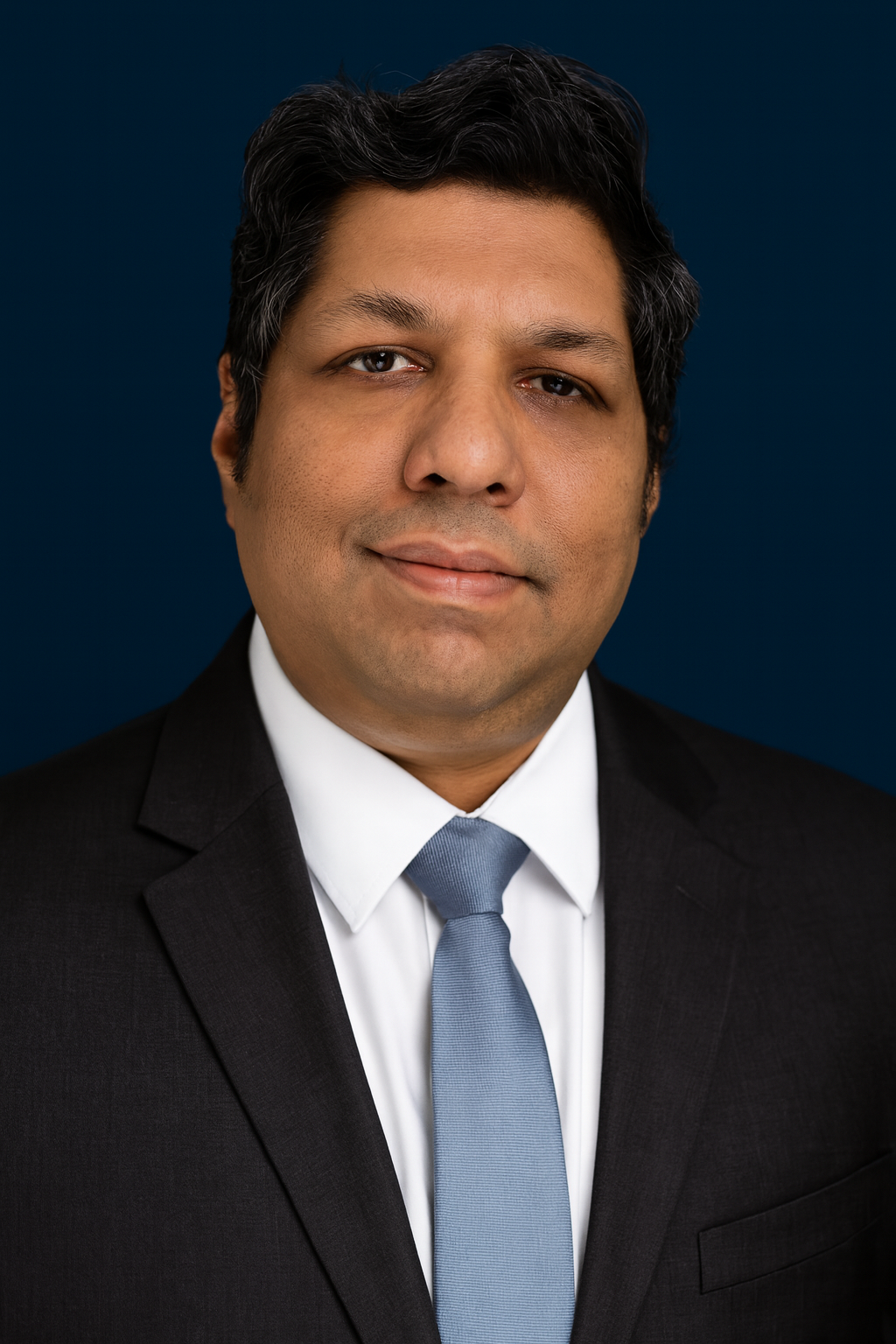
Prasad Govenkar is an experienced enterprise architect with over 24 years of industry expertise, specializing in telecom BSS solutions and large-scale technology transformations. Alongside his professional career in the technology domain, he has developed a strong passion for personal finance, investing, and wealth
Through InvestIndia.blog, Prasad shares practical, easy-to-understand insights to help individuals take control of their financial future. His approach combines analytical thinking from his engineering background with real-world investing experience, making complex financial concepts simple and actionable.