
Why Diversifying Your Investments Is Not Optional Anymore
A straight-talking guide for Indian investors who want their money to work harder — and smarter — in 2025.
Let’s start with a question most of us have faced at some point: you put a chunk of your savings into one stock — maybe it was a tip from a friend, maybe you’d been watching it for months — and then one bad earnings report later, a third of your money is gone.
That’s not bad luck. That’s the cost of not diversifying.
In 2025, with markets swinging between highs and gut-wrenching dips, Indian investors who spread their money across multiple asset types are sleeping much better at night than those who bet everything on one horse.
💡 The golden rule: A diversified portfolio doesn’t mean you’ll get rich overnight — it means you won’t go broke overnight either. It’s the difference between building wealth and gambling with it.
What Exactly Is Investment Diversification?
Think of your portfolio like a thali — you wouldn’t eat a full plate of only dal, would you? You’d want rice, sabzi, roti, curd and maybe a sweet on the side. Each dish serves a different purpose, and together they make a balanced, satisfying meal.
That’s exactly what diversification does. It’s the practice of spreading your money across different asset classes — equities, fixed deposits, gold, real estate, mutual funds — so that if one performs poorly, the others can hold the fort.
The goal isn’t variety for variety’s sake. It’s about making sure your financial future doesn’t depend on any single investment doing well.
Why It Matters More Than Ever in India Right Now
The Indian market is exciting — but it’s volatile. Geopolitical tensions, fluctuating interest rates, currency depreciation, and global economic shifts all affect your returns in ways that are impossible to predict.
Consider this: 43% of Indian investors own multiple mutual funds that hold the same underlying stocks — meaning they think they’re diversified, but they’re actually just duplicating risk in different packaging.
And only 12% of Indian investors allocate any money internationally, which means most of us are missing out on currency hedging and global growth opportunities.
A Real-World Example That Hits Close to Home
Imagine two investors — Priya and Rahul — each starting with ₹5 lakh in 2022.
Rahul put everything into one sector: PSU stocks, which delivered spectacular gains in 2023–24. But when the market cycle shifted in early 2025, he saw an 18% loss almost overnight.
Priya split her money — 40% in IT and FMCG equities, 30% in debt mutual funds, and 30% in a mix of gold and FDs. When the same market downturn hit, her losses were limited to just ₹48,000 instead of over ₹2.2 lakh.
Same market conditions. Very different outcomes. That’s the power of diversification.
Where Can Indian Investors Diversify?
India actually offers one of the richest menus of investment options in the world right now. Here’s a quick look at the main asset classes worth considering:
Equity (Stocks & Mutual Funds)
High growth potential. Spread across large-cap (50%), mid-cap (30%), small-cap (20%) for balanced equity exposure.
Fixed Deposits & Debt Funds
Stable, predictable returns. Senior citizens earn up to 7.30% p.a. FDs are ideal for capital protection.
Gold & Sovereign Gold Bonds
A proven hedge against inflation and rupee depreciation. Experts suggest 5–10% allocation.
Real Estate & REITs
REITs offer 8–10% yield with low stock market correlation. No property management headaches.
International Funds
Hedge against rupee depreciation. Investing 10–15% in US or European markets adds a powerful cushion.
ESG & Thematic Funds
ESG funds outperformed the Nifty by 4% in 2024. A growing option for conscious investors.
How Should You Actually Start?
You don’t need ₹50 lakh to start diversifying. A SIP of ₹5,000 a month split across two or three mutual fund categories is a solid beginning.
Here’s a simple framework that many financial planners recommend as a starting point for middle-income Indian investors:
🟢 Equity (Mutual Funds / Stocks): 50–60% — for long-term wealth creation
🟡 Debt (FDs, bonds, debt funds): 20–30% — for stability and liquidity
🟠 Gold (SGB, ETFs): 5–10% — as an inflation hedge
🌐 International exposure: 10–15% — for currency and growth diversification
Remember: this is a starting framework, not a fixed formula. Your age, income, goals and risk tolerance all matter. A 25-year-old with a stable job can take more equity risk than a 55-year-old approaching retirement.
Common Mistakes Indian Investors Make
Diversification sounds simple in theory — but in practice, there are a few traps that catch even experienced investors off guard.
🚫 Buying too many similar mutual funds: Having 8 large-cap funds is not diversification — it’s duplication. Five to seven well-chosen funds are plenty.
🚫 Ignoring rebalancing: If your equity grows to 80% of your portfolio, you’re now taking on more risk than you planned. Review and rebalance at least once a year.
🚫 Chasing last year’s winners: Sectoral funds that were stars in 2024 may be drags in 2025. Past returns do not guarantee future performance.
🚫 Forgetting debt: Many young investors skip fixed-income products entirely, leaving themselves exposed when equity markets turn rough.
When You Should NOT Rely on Google Search — Talk to an Expert Instead
Google is a great starting point. But when it comes to your money, there are situations where reading blog posts — including this one — is simply not enough. You need a SEBI-registered financial advisor or certified financial planner in these cases:
🚨 Don’t Google This — Call an Expert Instead
- You have a lump sum of ₹10 lakh or more to invest and don’t know where to begin
- You’re planning for retirement within the next 10 years and need a structured withdrawal strategy
- You have a complex tax situation — rental income, business income, capital gains all in the same year
- You’re going through a major life event: marriage, divorce, inheritance, job loss
- Your investments have significantly underperformed the market for 2+ years and you don’t know why
- You want to invest in AIFs, ULIPs, or structured products you don’t fully understand
- You’re trying to plan for a child’s education in a specific currency abroad
A good financial advisor isn’t a luxury — they’re an investment in getting your money decisions right. SEBI’s RIA (Registered Investment Advisor) registration gives you a baseline of trust and accountability.
The Bottom Line
Diversification isn’t about being timid with your money. It’s about being smart with it. The goal is to make sure no single bad decision — or no single bad market cycle — can wipe out what you’ve worked hard to build.
Start small if you need to. A ₹500 SIP in a balanced fund, a little gold in the form of a Sovereign Gold Bond, and a basic FD is already a diversified start. Build from there as your income and confidence grow.
Markets will go up. Markets will come down. But a well-diversified portfolio will help you stay in the game long enough to win it.
📌 Quick Takeaway: Aim for 5–7 diversified instruments across at least 3 asset classes. Review once a year. Rebalance if any single asset crosses 60% of your total portfolio. And when in doubt — talk to a qualified advisor, not just a search engine.
📚 Sources & Further Reading
-
Moat Wealth — Portfolio Diversification for Indian Investors (2025):
https://moatwealth.com/knowledge/portfolio-diversification-indian-investors/ -
Bajaj Finance — Tips to Diversify Your Investment Portfolio:
https://www.bajajfinserv.in/investments/diversify-your-investment-portfolio -
HDFC Life — How to Diversify Your Investments:
https://www.hdfclife.com/insurance-knowledge-centre/investment-for-future-planning/how-to-diversify-investment -
Indiabulls Securities — Build a Balanced Portfolio with Diversification:
https://www.ibullssecurities.com/blog/how-to-build-a-balanced-portfolio-with-diversification -
The Fixed Income — Portfolio Diversification Explained:
https://www.thefixedincome.com/blog/bonds-and-debt/portfolio-diversification-explained-achieve-financial-stability-and-growth/ -
Fox & Angel — Investment Options in India 2024:
https://foxnangel.com/blogs/investment-options-in-india-diversify-your-portfolio-in-2024.html
⚠️ Disclaimer: This blog post is for educational and informational purposes only and does not constitute financial advice. Please consult a SEBI-registered investment advisor before making any investment decisions. Past performance is not indicative of future results.
Want more money tips like this? Join our WhatsApp channel — it’s free. 📲
Follow Our WhatsApp ChannelGet weekly finance insights, market updates and investment ideas — delivered to your WhatsApp.

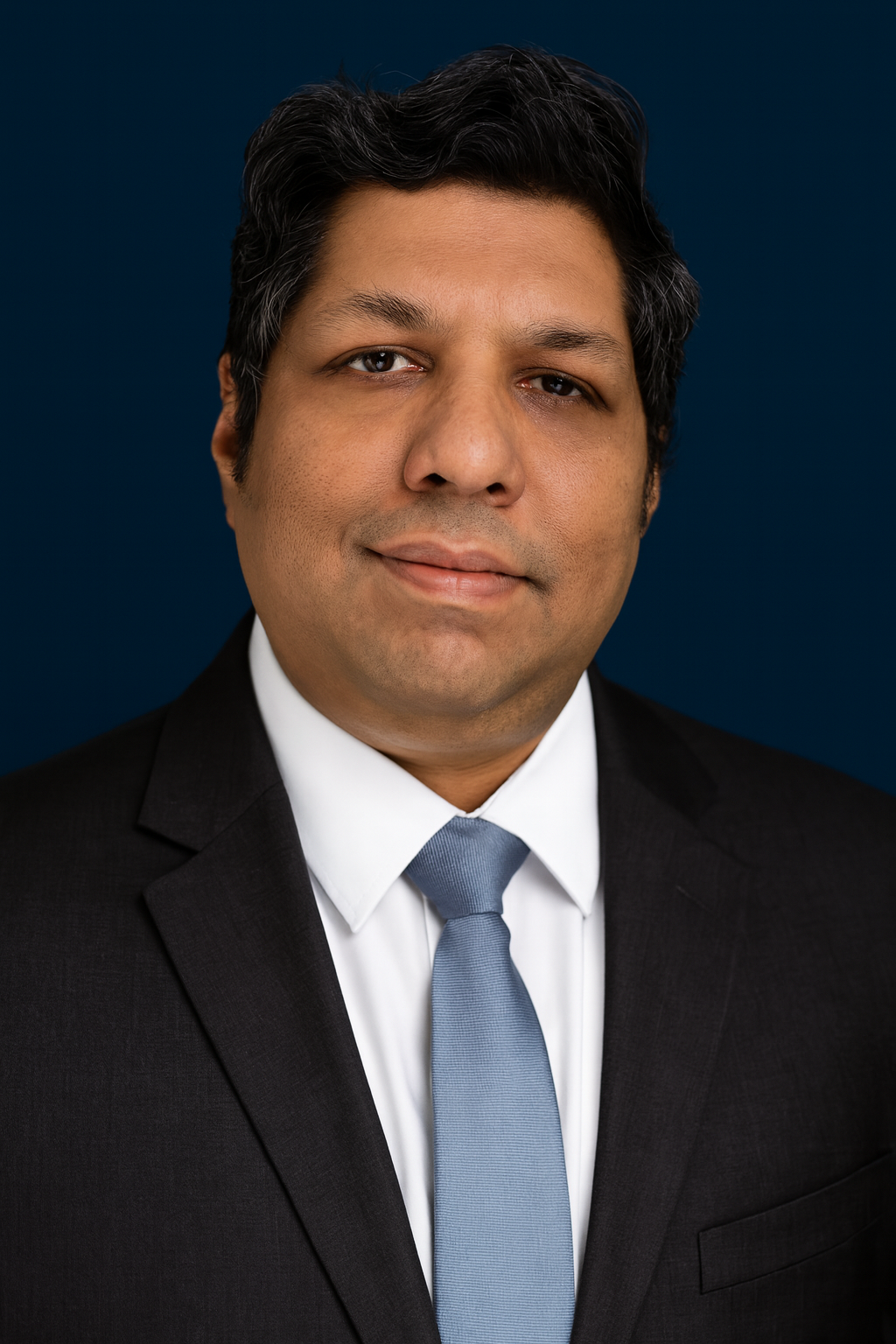
Prasad Govenkar is an experienced enterprise architect with over 24 years of industry expertise, specializing in telecom BSS solutions and large-scale technology transformations. Alongside his professional career in the technology domain, he has developed a strong passion for personal finance, investing, and wealth
Through InvestIndia.blog, Prasad shares practical, easy-to-understand insights to help individuals take control of their financial future. His approach combines analytical thinking from his engineering background with real-world investing experience, making complex financial concepts simple and actionable.