Best Investment Strategy for ₹10–50 Lakh Lump Sum in India (2026 Complete Guide)
Received a bonus, sold a property, or built up savings? Here’s exactly how to invest ₹10 to ₹50 lakh as a lump sum in India — based on your risk profile, time horizon, and goals.
Imagine this: you have ₹20 lakh sitting in your savings account — maybe from a property sale, a work bonus, an inheritance, or years of disciplined saving. The bank is offering 3.5% interest. Inflation is running above 5%. Every month you delay, your real wealth is quietly eroding.
This is the exact dilemma that millions of middle-class and upper-middle-class Indians face — the challenge of investing a large lump sum wisely, without taking unnecessary risks or making costly mistakes.
In this comprehensive guide, you’ll learn:
- The best investment options for ₹10–50 lakh in 2026
- How to build a portfolio based on your risk profile
- The STP (Systematic Transfer Plan) strategy to reduce lump sum timing risk
- Tax-efficient ways to invest large amounts
- Common mistakes that even smart investors make
📋 Table of Contents
- What Is Lump Sum Investing?
- Before You Invest: 4 Questions to Answer
- Best Investment Options for ₹10–50 Lakh
- Recommended Portfolio Allocations by Risk Profile
- The STP Strategy: Smarter Than Dumping It All at Once
- Tax Planning for Large Lump Sum Investments
- Key Insights & Expert Tips
- Real-Life Case Study
- Common Mistakes to Avoid
- FAQs
- Conclusion
1. What Is Lump Sum Investing?
Lump sum investing means deploying a large, one-time amount into an investment instrument — rather than spreading it out in regular monthly instalments (SIPs). The primary advantage is that your entire capital starts compounding from day one.
As a comparison: investing ₹2 lakh as a lump sum at 12% annual return for 15 years can grow to over ₹10 lakh. The same amount drip-fed through a SIP would earn considerably less in the same period — because not all capital is deployed simultaneously.
But here’s the real challenge: timing. What if you invest your ₹25 lakh right before a 30% market correction? This fear is real — and it’s exactly why having a strategy matters more than having money.
2. Before You Invest: 4 Questions to Answer
Before looking at any investment product, ask yourself these four questions honestly. They will determine your entire investment approach.
Question 1: What is your time horizon?
- Less than 2 years: Capital protection is the priority. Avoid pure equity. Prefer liquid funds, short-term FDs, or debt funds.
- 2–5 years: Balanced approach — hybrid funds, FDs, moderate equity exposure.
- 5+ years: Equity-heavy portfolio can capture market growth over full cycles.
Question 2: What is your risk appetite?
- Conservative: Can’t stomach seeing your ₹20 lakh drop to ₹15 lakh even temporarily.
- Moderate: Okay with short-term fluctuations for long-term gains.
- Aggressive: Comfortable with high volatility in pursuit of higher returns.
Question 3: Do you have an emergency fund?
Never invest your entire lump sum without keeping 6–12 months of expenses in a separate liquid account. Don’t invest your emergency money.
Question 4: Is this corpus earmarked for a specific goal?
Retirement in 20 years? Child’s education in 8 years? Buying a house in 3 years? Your goal timeline shapes everything — from asset allocation to the specific funds you choose.
3. Best Investment Options for ₹10–50 Lakh in 2026
Here’s a detailed breakdown of every major investment avenue suited for a large lump sum in the Indian context, along with realistic return expectations and risk levels.
Option A: Equity Mutual Funds (Flexi-Cap / Large-Cap)
For investors with a 5+ year horizon, equity mutual funds remain among the most powerful wealth-creation instruments. Flexi-cap funds like Parag Parikh Flexi Cap Fund offer the flexibility to allocate across large, mid, and small-cap stocks based on market opportunities — with some even holding international equity for additional diversification.
- Expected returns: 10–14% CAGR over 7–10 years (market-linked, not guaranteed)
- Risk level: Moderate to High
- Tax: LTCG at 12.5% on gains above ₹1.25 lakh after 12 months
- Ideal for: Long-term wealth creation, retirement corpus building
Option B: Hybrid / Balanced Advantage Funds
HDFC Balanced Advantage Fund and similar dynamic asset allocation funds automatically shift between equity and debt based on market valuations. When markets are expensive, they reduce equity; when markets correct, they increase equity. This makes them ideal for lump sum investors worried about timing the market.
- Expected returns: 9–12% CAGR over 5+ years
- Risk level: Moderate
- Ideal for: First-time large lump sum investors, those closer to retirement
Option C: Fixed Deposits (FDs)
Bank FDs remain India’s most trusted safe-haven investment. As of 2026, leading banks offer 7–7.5% on 1–3 year FDs, with Small Finance Banks going up to 8.5–9%. For risk-averse investors or those with short time horizons, FDs provide guaranteed returns and DICGC insurance coverage up to ₹5 lakh per bank.
- Current rates: ~7–7.5% in major banks; up to 8.5% in small finance banks
- Tax: Interest is taxed at your income slab rate — inefficient for high earners
- Strategy tip: Split across multiple banks to stay within ₹5 lakh DICGC insurance per bank
Option D: Public Provident Fund (PPF)
PPF offers tax-free returns at 7.1% (as of Q4 FY 2025–26) with complete sovereign backing. The catch: you can invest a maximum of ₹1.5 lakh per year, so you cannot park your entire ₹20 lakh here at once. But it’s an excellent supplementary option for stable, tax-free compounding — especially in the EEE (Exempt-Exempt-Exempt) category.
- Annual limit: ₹1.5 lakh
- Lock-in: 15 years (partial withdrawals after Year 7)
- Tax benefit: EEE — contribution, interest, and maturity are all tax-free
Option E: RBI Floating Rate Savings Bonds
Backed by the Government of India, these bonds offer a floating rate linked to the NSC rate plus 35 bps. Currently offering around 8.05%, they are an excellent option for conservative investors who want to beat FD rates safely. No upper investment limit — making them suitable for larger corpus deployment.
- Current rate: ~8.05% (floating, reset every 6 months)
- Lock-in: 7 years (senior citizens get 4–6 years)
- Risk: Nil (sovereign guarantee)
- Tax: Interest taxable at slab rate
Option F: REITs (Real Estate Investment Trusts)
For the ₹30–50 lakh bracket, REITs offer a compelling way to gain commercial real estate exposure without buying a physical property. India’s listed REITs (Embassy Office Parks, Mindspace, Nexus Select Trust) have offered 7–9% annual distribution yields, with potential for capital appreciation.
- Expected yield: 7–9% distribution + potential capital gains
- Minimum investment: One lot (~₹10,000–15,000)
- Ideal for: Passive income generation, portfolio diversification
Learn more: Top 10 REITs in India 2026 — InvestIndia Blog
Option G: National Pension System (NPS)
NPS offers market-linked returns (estimated 9–12% for equity-heavy allocation) with powerful tax benefits — ₹1.5 lakh under 80CCD(1) and an additional ₹50,000 under 80CCD(1B). For investors above 40 looking to build a retirement corpus, NPS is worth serious consideration.
Option H: Gold (Gold ETFs / Sovereign Gold Bonds)
Gold serves as a hedge against inflation and currency devaluation. Sovereign Gold Bonds (SGBs) — when available — offer 2.5% annual interest on top of gold price returns, with zero capital gains tax if held to maturity (8 years). Limit gold exposure to 5–10% of your lump sum for diversification.
| Investment Option | Expected Returns | Risk Level | Time Horizon | Tax Efficiency |
|---|---|---|---|---|
| Flexi-Cap Mutual Funds | 10–14% CAGR | High | 5+ years | Moderate (LTCG 12.5%) |
| Balanced Advantage Funds | 9–12% CAGR | Moderate | 3–5 years | Moderate |
| Bank Fixed Deposits | 7–7.5% | Very Low | 1–5 years | Low (slab rate) |
| RBI Floating Rate Bonds | ~8.05% | Very Low | 7 years | Low (slab rate) |
| PPF | 7.1% | Very Low | 15 years | Very High (EEE) |
| REITs | 8–11% total | Moderate | 3+ years | Moderate |
| NPS (Equity heavy) | 9–12% | Moderate | Till retirement | High (80CCD benefits) |
| Sovereign Gold Bonds | Gold + 2.5% p.a. | Low-Moderate | 8 years | High (tax-free on maturity) |
4. Recommended Portfolio Allocations by Risk Profile
There is no one-size-fits-all answer. Here are three portfolio blueprints — Conservative, Moderate, and Aggressive — for a ₹20 lakh lump sum (scale proportionally for your corpus).
Conservative Portfolio (Low Risk, Short Horizon 1–3 years)
(₹8 lakh)
(₹6 lakh)
(₹4 lakh)
(₹2 lakh)
Moderate Portfolio (Medium Risk, 3–7 Year Horizon)
(₹10 lakh)
(₹4 lakh)
(₹4 lakh)
(₹2 lakh)
Aggressive Portfolio (High Risk, 7+ Year Horizon)
(₹13 lakh)
(₹3 lakh)
(₹2 lakh)
(₹2 lakh)
5. The STP Strategy: Smarter Than Dumping It All at Once
The single biggest mistake lump sum investors make is investing everything into equity on a single day. Markets fluctuate daily. If you invest ₹30 lakh at a market peak and the index corrects 25%, you’re staring at a ₹7.5 lakh paper loss that can be psychologically devastating.
Enter: Systematic Transfer Plan (STP) — the professional investor’s answer to lump sum timing risk.
How STP Works
- Park your entire lump sum (say ₹25 lakh) into a liquid or overnight mutual fund first. This earns ~6.5–7% while you wait.
- Set up an automatic STP to transfer a fixed amount (say ₹2–3 lakh/month) from the liquid fund into your chosen equity fund.
- Over 8–12 months, your full corpus is gradually deployed into equity at different price points — benefiting from rupee cost averaging.
For larger amounts (₹30–50 lakh), consider extending STP over 12–18 months with monthly transfers of ₹2–4 lakh. Most major AMCs offer STPs across their fund families for free.
6. Tax Planning for Large Lump Sum Investments
Investing ₹10–50 lakh wisely means keeping more of what you earn. Here’s how tax efficiency should shape your investment decisions:
Equity Mutual Funds (Post-2024 Tax Rules)
- Short-Term Capital Gains (STCG) — held less than 12 months: taxed at 20%
- Long-Term Capital Gains (LTCG) — held over 12 months: taxed at 12.5% on gains exceeding ₹1.25 lakh per year
- Strategy: Harvest LTCG of up to ₹1.25 lakh annually tax-free by redeeming and reinvesting
Debt Mutual Funds (Post-2023 Changes)
All gains from debt mutual funds (with less than 35% equity exposure) are now taxed at your income slab rate, regardless of holding period. This has reduced their tax advantage significantly. Consider RBI Bonds or FDs as simpler alternatives for the debt portion.
PPF for Tax-Free Compounding
Maximize your PPF contribution (₹1.5 lakh/year) from your lump sum over multiple years. It’s the most tax-efficient guaranteed return instrument in India — fully exempt at all stages (EEE).
ELSS for Tax Savings
If you haven’t exhausted your Section 80C limit (₹1.5 lakh), allocate that portion to ELSS funds. They offer equity-linked returns with a 3-year lock-in and tax deduction. Read our detailed guide: Is ELSS Better Than FD for Salaried Employees? (2026)
Also see: How to Pay ZERO Tax on ₹12 Lakh Salary (Legal Guide 2026)
7. Key Insights & Expert Tips
8. Real-Life Case Study
Vikram, 38, IT Professional — ₹30 Lakh from Property Sale (Bengaluru)
Situation: Vikram sold a plot his parents gifted him and received ₹30 lakh after paying Long-Term Capital Gains tax. He had no immediate need for the money but wanted it to fund his retirement in 20 years and his daughter’s college education in 10 years.
Goals:
- Daughter’s education fund: ₹40 lakh needed in 10 years
- Retirement corpus: ₹2 crore needed in 20 years
- Emergency buffer: ₹3 lakh maintained separately
Strategy Deployed:
- ₹5 lakh → Liquid fund (for STP over 10 months to a flexi-cap fund for daughter’s goal)
- ₹12 lakh → Balanced Advantage Fund (for medium-term stability + moderate growth)
- ₹8 lakh → 3 equity mutual funds via STP — large-cap, flexi-cap, and a mid-cap fund (for retirement corpus, 20-year horizon)
- ₹3 lakh → PPF (₹1.5 lakh this year + ₹1.5 lakh next year to maximize tax-free compounding)
- ₹2 lakh → Sovereign Gold Bonds (hedge + 2.5% annual interest)
Projected Outcome (illustrative, not guaranteed):
- Daughter’s goal (₹5 lakh in flexi-cap, 10 years at 12%): ~₹15.5 lakh ✅
- Balanced Advantage Fund (₹12 lakh, 10 years at 10%): ~₹31 lakh ✅
- Equity funds for retirement (₹8 lakh, 20 years at 12%): ~₹77 lakh
- PPF (₹3 lakh over 2 years, 15 years at 7.1%): ~₹8 lakh (tax-free) ✅
Key Lesson: By splitting the corpus across multiple goals with different time horizons, Vikram avoided putting all his money in one place. Each allocation was chosen to match the goal’s timeline and risk tolerance — not based on fear or FOMO.
9. Common Mistakes to Avoid
❌ Mistake 1: Investing the Entire Amount in One Go at Market Peaks
Use STP to deploy gradually. A market at all-time highs isn’t a reason to avoid investing — but it is a reason to spread entry over 6–12 months.
❌ Mistake 2: Putting Everything in FDs
FD interest is fully taxable at your slab rate. For a 30% bracket investor, a 7.5% FD returns just ~5.25% post-tax — below inflation. You’re losing real purchasing power while feeling “safe.”
❌ Mistake 3: Chasing Last Year’s Top Performers
Small-cap funds that returned 45% last year often return -25% next year. Past performance is not a reliable predictor. Choose funds based on consistency, fund house quality, and alignment with your goal — not last year’s returns.
❌ Mistake 4: Ignoring Insurance Before Investing
If you don’t have adequate term life insurance and health insurance, a single medical emergency can wipe out your entire lump sum corpus. Ensure 10–15x income coverage via term insurance before investing aggressively.
❌ Mistake 5: Not Having an Exit Plan
Knowing when to invest is only half the equation. Know when you will redeem — and in what sequence. For retirement, plan a bucket strategy: 1–2 years of expenses in liquid instruments, 3–5 years in debt, rest in equity.
❌ Mistake 6: Over-Diversification (Owning 15+ Funds)
Owning 12 equity mutual funds doesn’t diversify you — it just creates complexity and dilutes returns. 3–5 well-chosen funds across categories is more than sufficient for any Indian investor.
Related reading: 11 Types of Mutual Funds Every Indian Investor Must Know
10. Frequently Asked Questions
11. Conclusion
Investing ₹10–50 lakh as a lump sum is one of the most impactful financial decisions you’ll make. Done right, it can fund your children’s education, build your retirement corpus, and create lasting wealth. Done wrong — or not done at all — it can quietly lose value to inflation year after year.
The key takeaways are simple:
- Match your investment to your time horizon and risk appetite — not to trending funds or neighbour’s tips.
- Use STP to reduce timing risk when deploying into equity.
- Diversify across asset classes — don’t put everything in equity or everything in FDs.
- Think tax-efficiency first — the post-tax return is what matters, not the headline rate.
- Start today — even an imperfect investment today beats a perfect plan that never gets executed.
Your ₹20 or ₹40 lakh isn’t just money — it represents years of hard work, delayed gratification, and financial discipline. It deserves a thoughtful, structured home.
Explore more from InvestIndia Blog:
- Best Small Cap Mutual Funds in India 2026
- NPS Vatsalya for Kids 2026 — Everything Parents Must Know
- New Income Tax Act 2025: Key Changes for Every Indian
Useful external resources:

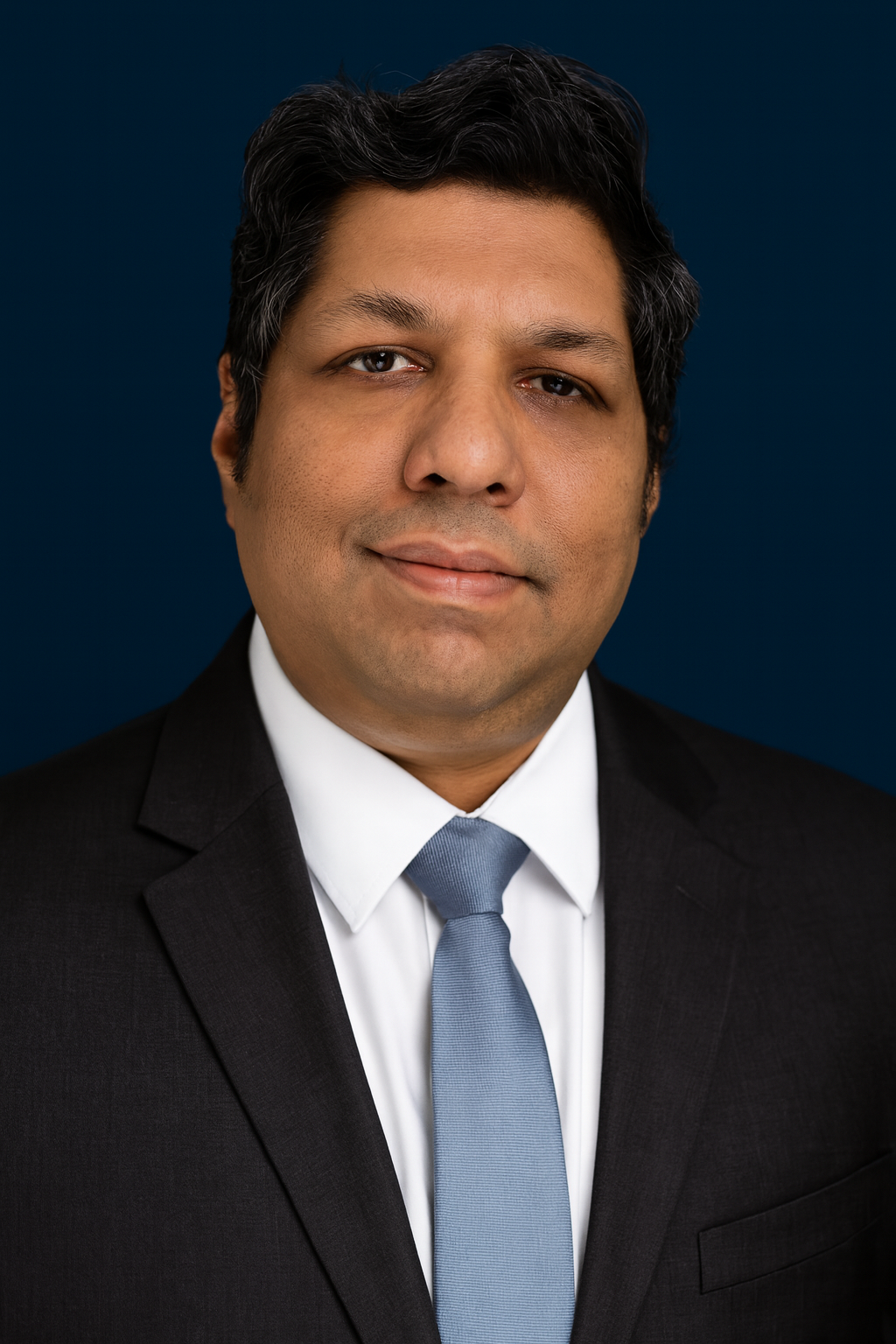
Prasad Govenkar is an experienced enterprise architect with over 24 years of industry expertise, specializing in telecom BSS solutions and large-scale technology transformations. Alongside his professional career in the technology domain, he has developed a strong passion for personal finance, investing, and wealth
Through InvestIndia.blog, Prasad shares practical, easy-to-understand insights to help individuals take control of their financial future. His approach combines analytical thinking from his engineering background with real-world investing experience, making complex financial concepts simple and actionable.